
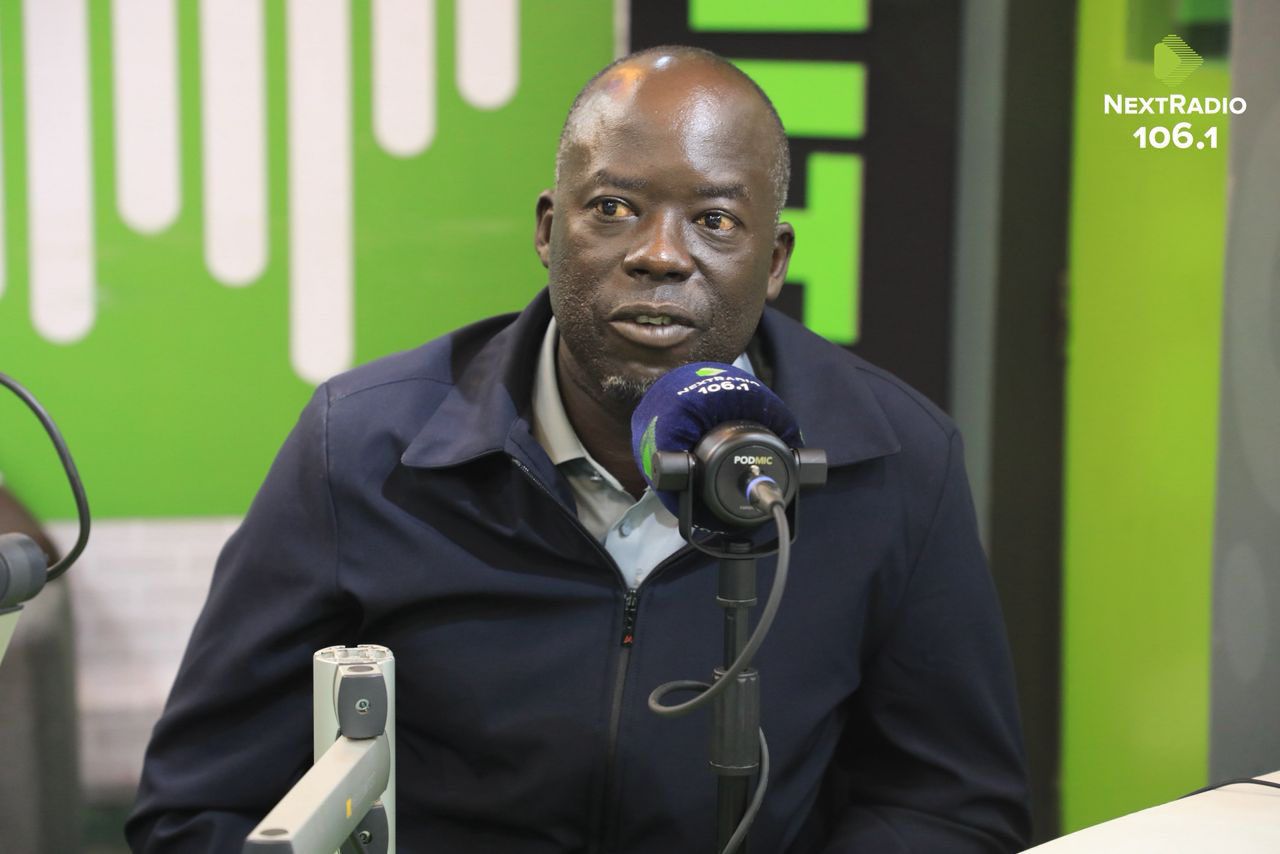
Former Aruu County Member of Parliament Odonga Otto has said that President Museveni’s letter effectively “conceded to public outcry” over the proposed Protection of Sovereignty Bill, 2026, describing the development as a strength rather than a weakness, and calling on government to “shelve” the legislation entirely for broader consultation.
Speaking to Canary Mugume during Next Big Talk hosted by Next Radio on Saturday, Otto said that recent public exchanges around the Bill, including Museveni’s public distancing from what he described as “misinterpretations” of the draft law, indicated internal contradictions in the legislative process and growing pressure from citizens and institutions.
Otto said the President’s clarification that he did not intend to restrict foreign direct investment, remittances, or religious funding showed that the debate had already shifted away from the original intent.
Otto further commended the Governor of the Bank of Uganda, Michael Atingi-Ego, for his submission to Parliament warning that the proposed law could trigger severe economic disruption. He described the governor’s intervention as decisive, stating that it was “the last straw that broke the camel’s back” in the unfolding national debate around the legislation.
According to Otto, the current version of the Bill being processed in Parliament does not reflect the President’s original intention. He alleged that significant alterations had been made during the drafting and committee stages, warning that such changes amounted to a serious breach of trust in the legislative process.
“This bill the President intended is not what is before the parliamentary committee. This is treason. Someone added their own ‘things’ into the sovereignty bill. Someone should be held accountable,” he said.
Otto further advised government to “shelf” the bill, adding that the 11th parliament is abit “late and spent” to proceed with it.
“Uganda is not ending tomorrow, we need more comprehensive consultation with the Sovereignty bill,” he said.
Otto also argued that if properly structured, the Sovereignty Bill should instead focus on addressing corruption and wealth diversion among public officials.
“The Sovereignty Bill should address ministers who take Uganda’s money and acquire properties abroad. I know ministers who own properties in London and the USA. They take our money and go build in foreign countries. The bill should address that,” he said.
Otto’s remarks come against the backdrop of a contentious national debate over the Protection of Sovereignty Bill 2026, which was tabled by State Minister for Internal Affairs David Muhoozi.
The draft legislation proposes expanded government oversight of digital platforms, mandatory registration of entities receiving foreign funding, reporting requirements for financial institutions, and limits on foreign funding without ministerial approval.
It also introduces provisions that criminalise so-called “economic sabotage,” a term critics argue is broadly defined and open to interpretation.
President Museveni had earlier defended his vision for the Bill, stating that it was intended to strengthen Uganda’s sovereignty in policy decision-making, rooted in historical struggles for independence and self-determination.
He emphasized that the proposal was not aimed at restricting foreign investment, remittances, or religious funding, and reaffirmed Uganda’s commitment to a liberal economic framework.
However, Governor Michael Atingi-Ego warned Parliament that the Bill could introduce significant economic risks, including potential capital flight, weakening of the shilling, rising import costs, and disruption of foreign exchange stability.
He also cautioned that Uganda could face reduced reserves, increased reliance on informal financial channels, and possible damage to international banking relationships if investor confidence is undermined.
Civil society organisations and legal experts have similarly raised concerns, warning that the broad scope of the Bill could restrict freedoms of expression, association, and access to information, while increasing legal exposure for journalists, researchers, and activists.
In response to mounting criticism, Attorney General Kiryowa Kiwanuka has tabled amendments to the Bill, exempting financial institutions supervised by the Central Bank, as well as medical and education facilities and religious institutions from its provisions.
Despite these changes, critics continue to argue that the core concerns surrounding oversight, enforcement powers, and freedom of expression remain unresolved.
Government officials, including the Attorney General and supporters within the ruling establishment, have defended the Bill as a necessary safeguard against foreign interference and covert influence operations, insisting that similar regulatory frameworks exist in other jurisdictions.
